
Self awareness practices is a skill you can learn. It helps you make better choices, build stronger relationships, and set clear goals. Research by Tasha Eurich shows that most people think they know themselves well. But only a few really do.
At Cornell University, studies found that self-awareness leads to better choices. It also helps you control your emotions and avoid putting things off.
This article will give you simple, backed-by-science tips for self-discovery. Start with small steps. Using habits and tiny practices can help you change your life.
We’ll talk about key ideas and effective methods. You’ll learn about daily journaling, mindfulness, and getting feedback from others. We’ll also share ways to keep going and build a supportive circle around you.
Use these tools every day. Over time, you’ll see real changes in your life.
Understanding Self Awareness and Its Importance
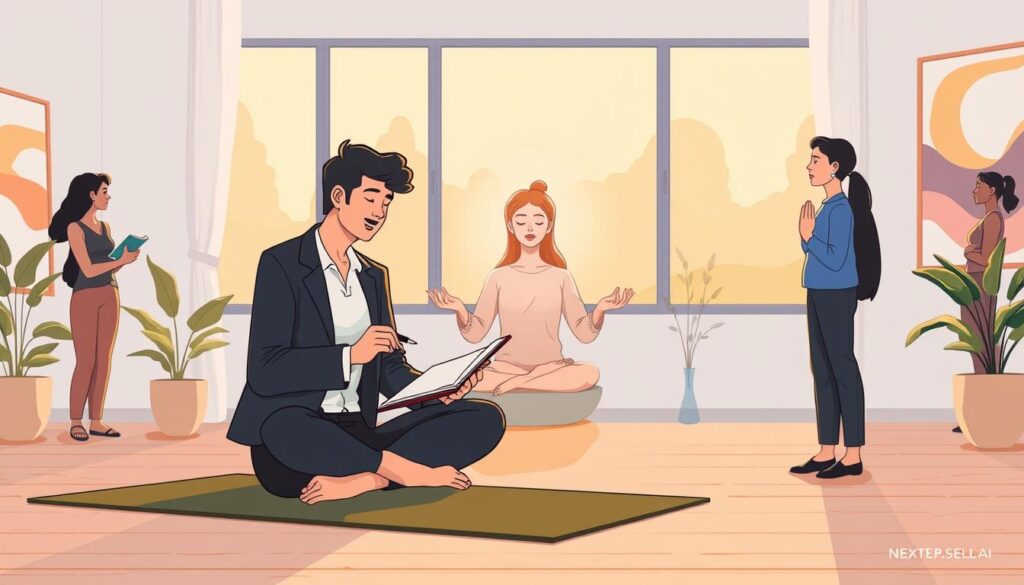
Self awareness is about noticing your thoughts, feelings, and actions right now. It’s about seeing what triggers you and how you react. By observing yourself, you can choose how to act instead of just reacting.
What is Self Awareness?
Self awareness mixes thinking about thinking with feeling your body. It’s like noticing when you think you’re bad at something. This helps you make better choices.
Feeling your body, like a tight jaw or warmth in your chest, helps you understand your emotions. Doing short body checks can make you feel clearer over time.
Benefits of Developing Self Awareness
Studies show that self awareness helps a lot. It makes you choose actions that match your values. This improves your work and personal life.
Knowing your emotions can make them less intense. This calms your brain and makes you feel better.
- Affect labeling: naming an emotion can cut its intensity by up to half.
- Brief daily mindfulness: strengthens the prefrontal cortex, boosts working memory, lowers anxiety, and reduces heart rate.
- CBT and guided reflection: help map links between thoughts, feelings, and actions to reveal blind spots.
Doing emotional intelligence activities helps you understand others better. This makes working and personal relationships stronger.
Common Misconceptions about Self Awareness
Self awareness is not just staring at yourself. It’s about noticing and changing your behavior. It’s a skill that gets better with practice.
Even short moments of mindfulness can help. Just a few deep breaths before a big moment can make a big difference.
Many people think they know themselves better than they really do. Studies show that what you think you know and what you really know can be different. Getting feedback from others and practicing self understanding can help you see things more clearly.
Effective Self Awareness Practices to Implement

Start with small routines that fit your day. These self discovery strategies build clarity over time. Short, regular habits beat occasional deep dives for lasting insight.
Daily journaling techniques
Use brief formats like emotion-tracking logs, trigger-response-outcome mapping, nightly values reflection, and prompt-based entries. Ask yourself “What made me proud today?” or “Did I overreact? Why?” Keep entries short and consistent to spot recurring themes.
Journaling reveals autopilot patterns and clarifies values. For example, tracking anxiety spikes before parent conferences can guide planning and coping. Try micro-practices: a 3–5 minute morning intention and a 5-minute nightly reflection to cement insight and prepare value-aligned choices.
Mindfulness and meditation methods
Practice naming emotions, body scans, observing thoughts with the Thought Stream Technique, pattern recognition, a quick values check, perspective shifts like STOP or H.A.L.T., and mindful moments via habit stacking. These mindfulness techniques create micro-gaps between stimulus and response.
Naming a feeling lowers its intensity and recruits the prefrontal cortex. Short body scans engage the insula and can reduce cortisol. Even 30 seconds of focused attention activates self-reflective regions of the brain.
Try practical recipes: the 5-second label trick for emotions, 10–15 second micro body scans while washing hands, the Thought Stream Technique (2–3 minutes picturing thoughts as leaves), and a 5-4-3-2-1 sensory check-in. Use apps like The Mindfulness App for guided sessions when you need structure.
Seeking feedback from others
External feedback uncovers blind spots people rarely see alone. Structured input shows how behaviors land with colleagues, friends, and partners and highlights patterns missed in private reflection.
Use quarterly personal reviews with trusted colleagues, targeted 360-style questions, and specific prompts about communication or emotional tone under stress. Approach feedback with curiosity and avoid defensiveness; treat input as data for pattern recognition.
Practical example: feedback about morning fatigue led someone to move critical meetings to later in the day. Small schedule shifts can improve performance and reduce friction.
Engaging in reflective activities
Expand beyond journaling and meditation with tools like the Mirror Technique, weekly pattern mapping, CBT exercises with a licensed therapist, and scheduled weekly check-ins to spot trends.
Link reflection to values through nightly checks and post-decision reviews to see which choices drain or energize you. Use transition moments—closing a laptop or between meetings—for micro-reflections.
Try the Micro-Pause Technique: take a deep breath, ask whether to continue the pattern, then choose a different response if needed. Combining introspection exercises, self reflection methods, and emotional intelligence activities makes change practical and measurable.
Overcoming Challenges in Self Awareness Journey
Starting introspection can be tough. Many face fears, anxiety, and perfectionism. They might also feel defensive or stuck in old habits.
Look out for signs like avoiding journaling or mindfulness. Dismissing feedback or rationalizing patterns is also a red flag. Repeating old reactions despite wanting to change is another warning sign.
Start small to avoid feeling overwhelmed. Short, regular practices can help. Try a two-minute breath check or a one-line journal entry each day.
Use habit stacking to make new habits stick. Attach a quick self-check to a daily routine, like having coffee. This makes it easier to form new habits.
Use tools to keep going. Set reminders for daily check-ins and use apps for guided support. Set simple goals like labeling three emotions each day.
Make progress visible by celebrating small wins. Notice patterns or pause before reacting. This helps you see how far you’ve come.
Make your environment support your growth. Keep a journal handy and set reminders for check-ins. Set aside time for reflection and consider professional help for deeper work.
A supportive setting helps you grow. It makes honest feedback easier and helps you become more self-aware. This makes self-reflection automatic and natural.